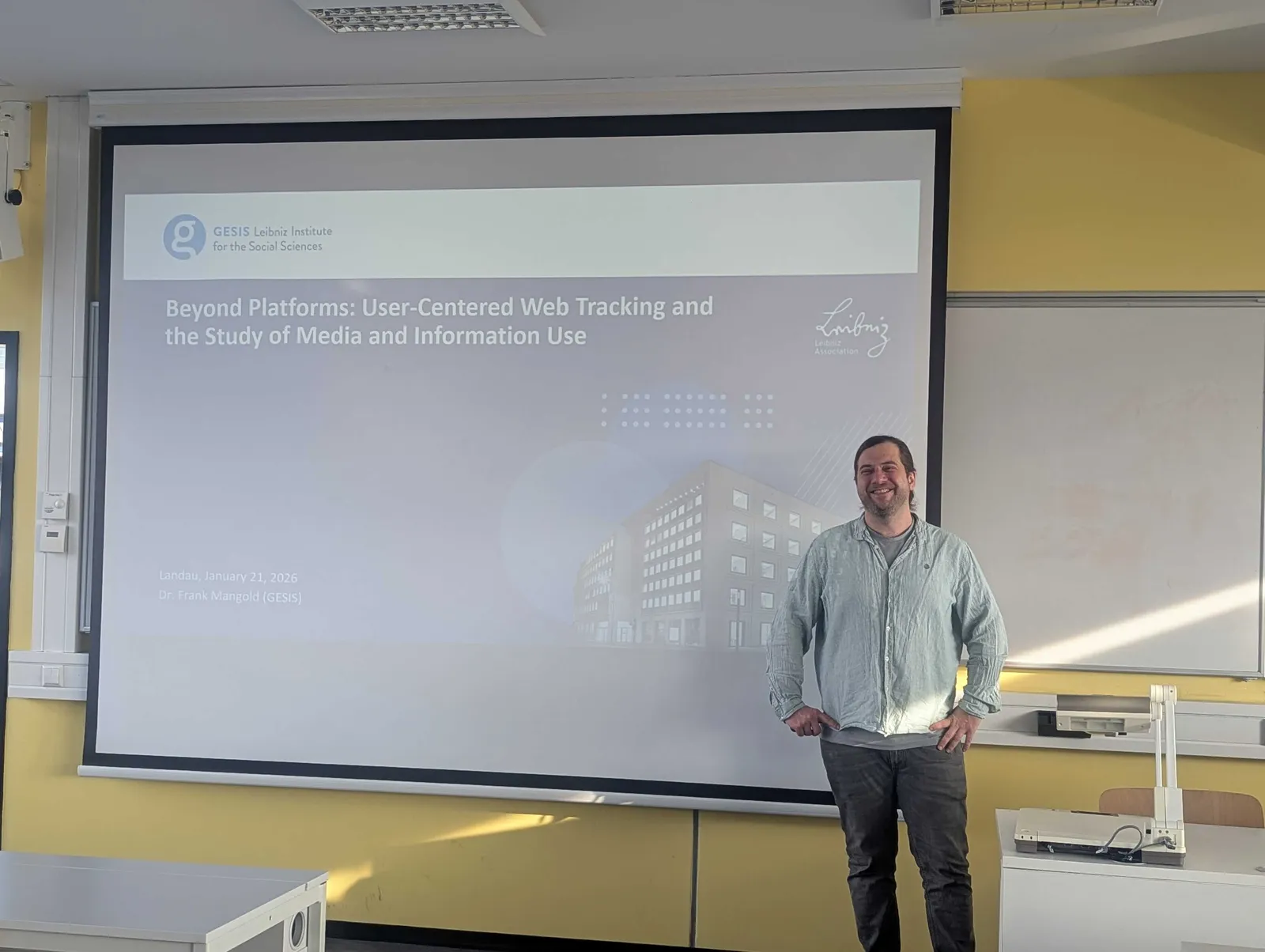
Yesterday, the Department of Psychology at RPTU University of Kaiserslautern-Landau hosted Dr. Frank Mangold from GESIS for a engaging session during their departmental colloquium. Dr. Mangold introduced "user-centered web tracking," a methodology that instead of only relying on data made available by social media and technology platforms, follows the user's browsing habits across the open web. He argued that this approach is essential for a comprehensive understanding of media and information use, as it allows researchers to form a more detailed and complete picture of user's browsing habits.
Dr. Mangold supported his framework with empirical examples from health and political communication. He illustrated how methods such as self-reported surveys or single-platform analytics are limited in capturing the situational and fragmented nature of modern internet usage. By utilizing user-centered tracking, researchers can illuminate digital habits that typically remain invisible, such as what leads a user to a specific content on a social media or news platform or how search platforms are used to locate content online.
The talk concluded with a practical look at the methodology itself, addressing the specific challenges of implementing these studies. Dr. Mangold discussed critical issues surrounding participant recruitment, informed consent, and maintaining long-term engagement in tracking panels. By combining these methodological insights with theoretical positioning, the presentation provided the Psychology department with a strong entry point into the possible futures of digital behavioral research.