
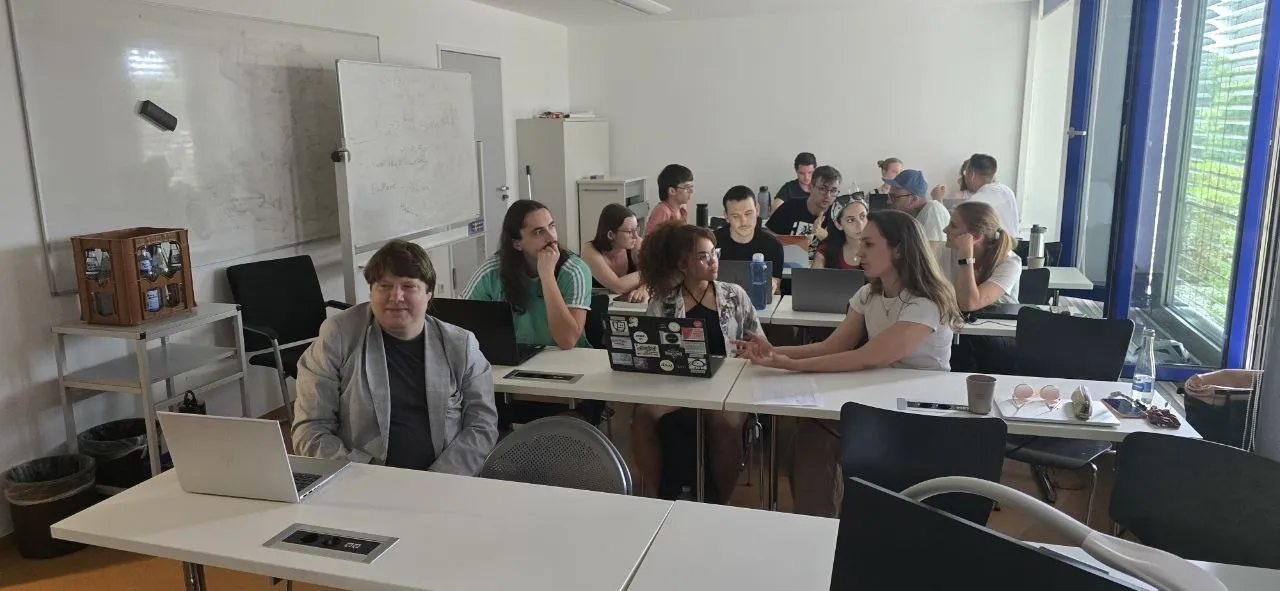
From July 1 to July 3, researchers, staff, and students gathered for an intensive three-day workshop, Machine Learning for Social Sciences, facilitated by Dr. Mykola Makhortykh from the University of Bern. Organized as part of the SCOPE initiative, the hands-on program was designed to bridge computational methods with traditional social inquiry. It guided participants through the fundamentals of machine learning, contrasting its predictive power with conventional statistical frameworks while emphasizing coding confidence and practical research applications.
Throughout the sessions, attendees tackled key challenges in modern data-driven research, from translating complex social constructs into quantifiable features to addressing algorithmic bias, ethical considerations, and data quality. Participants worked in interactive Google Colab environments, experimenting with supervised and unsupervised algorithms, validating model performance beyond simple accuracy metrics, and exploring cutting-edge developments in machine learning.
The workshop concluded with collaborative project labs, where participants applied these methodologies directly to their departmental research questions, troubleshot common coding pitfalls, and presented their project outlines for targeted feedback. By equipping attendees with both conceptual clarity and hands-on Scikit-learn workflows, the event successfully underscored how machine learning can enrich empirical social scientific inquiry.